
Skin Barrier Explained
We’ve all had that moment: your skin feels tight, flaky, or reactive for no apparent reason. A new serum, a change in weather, even a stressful week and suddenly, your skin seems to revolt. More often than not, these frustrations point to one thing: a compromised skin barrier.
The irony? The skin barrier isn’t just a “surface problem.” It’s your body’s first line of defense, and when it’s functioning well, everything else in your routine works better from hydration to actives like retinoids or niacinamide. Understanding how it works and what actually supports it can save weeks of trial-and-error frustration.
What Is the Skin Barrier?
The skin barrier, also called the stratum corneum, is the outermost layer of the epidermis. Far from being just dead skin cells, it is a dynamic, structured system that:
- Retains water to prevent dryness
- Protects against irritants, allergens, and microbes
- Supports healthy cell communication for repair and renewal
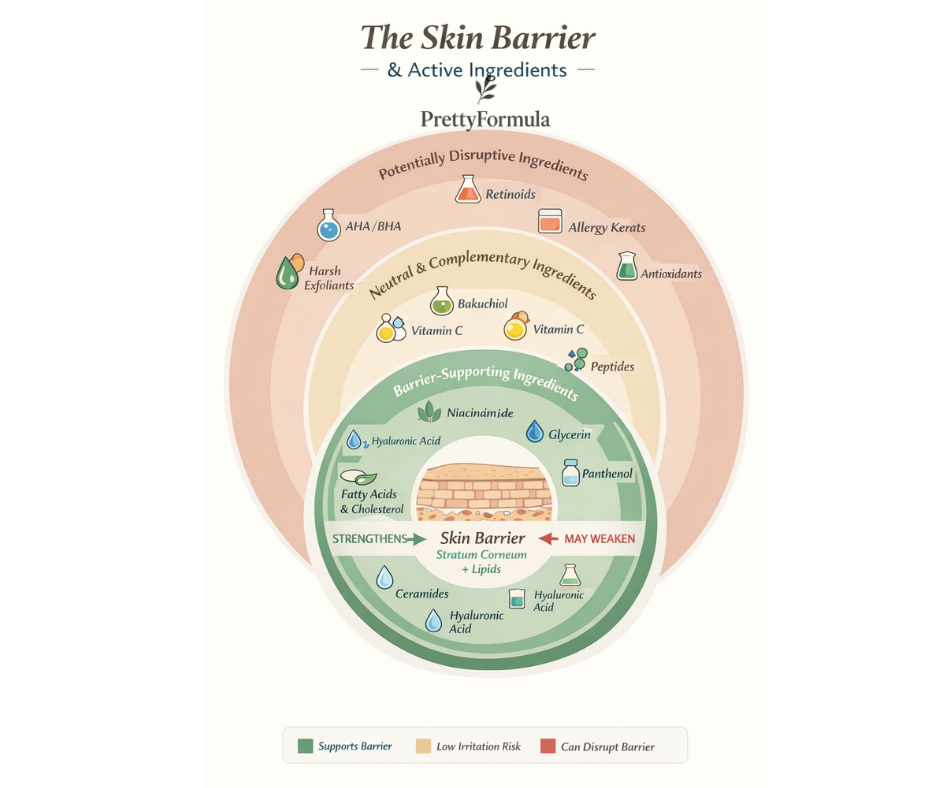
Think of it as a brick-and-mortar wall: the keratinocytes are the bricks, and the lipid matrix (ceramides, cholesterol, and free fatty acids) is the mortar holding everything together. When the wall is strong, your skin can maintain resilience and respond calmly to actives. When it’s weak, nothing sticks including moisture and irritation spreads easily.
Why the Skin Barrier Gets Compromised
Several factors can disrupt barrier function:
- Over-exfoliation or harsh cleansers strip lipids and proteins
- Environmental stressors like UV, pollution, or low humidity
- Inflammatory skin conditions (eczema, rosacea, acne)
- Aging naturally reduces lipid production and cell turnover
- Inconsistent or aggressive use of actives like retinoids or acids
Barrier compromise often presents as tightness, redness, dryness, or stinging signs that your skin is struggling to keep moisture in and irritants out.
How to Support the Skin Barrier
Supporting the barrier isn’t complicated, but it requires intentionality:
1. Hydrate and Reinforce
- Ingredients like hyaluronic acid, glycerin, and sodium PCA attract water into the skin.
- Ceramides, cholesterol, and fatty acids help rebuild the “mortar” of the barrier.
2. Cleanse Gently
- Use low-pH, sulfate-free cleansers
- Avoid hot water and excessive scrubbing
3. Protect
- Daily broad-spectrum sunscreen prevents UV-driven barrier damage
- Antioxidants like vitamin C or niacinamide can buffer environmental stress
4. Layer Actives Thoughtfully
- Introduce acids, retinoids, or exfoliating ingredients slowly
- Pair actives with barrier supportive moisturizers to reduce irritation
How Barrier Health Impacts Your Routine
A strong barrier is the foundation for any ingredient-focused routine:
- Retinoids and acids work better and cause less irritation
- Hydrating ingredients are retained longer, improving texture and elasticity
- Pigment-correcting ingredients like niacinamide or azelaic acid become more effective
Without a solid barrier, even the most advanced actives can trigger sensitivity instead of results.
Common Misconceptions About the Skin Barrier
- “Oily skin doesn’t need barrier support.”
Excess sebum does not equal a healthy barrier. Lipid composition and water retention matter more. - “Barrier repair is instant.”
Rebuilding lipids and protein structures takes time—often weeks of consistent care. - “If my skin stings, it’s cleaning properly.”
Stinging is usually a sign of barrier compromise, not effective cleansing. - “Thicker creams are always better.”
The right formulation matters more than heaviness; too occlusive a product can trap irritants or worsen breakouts.
Bottom Line
The skin barrier is the foundation for healthy, resilient skin. Understanding its structure and function isn’t just academic it’s practical. Every step in your routine, from cleansing to actives to sunscreen, interacts with this system. Protect it, support it, and everything else in your skincare arsenal performs better with less irritation.