
Skin Barrier Explained
Does your skin suddenly sting when you apply a familiar moisturizer? Or feel tight, flaky, and sensitive after adding a new treatment? Your skin barrier may need a gentler routine. Understanding what this protective outer layer does can help you recognize irritation, avoid overdoing active ingredients, and choose practical steps to support recovery.
The skin barrier is more than a cosmetic concern. Its outermost layer helps retain water and limit exposure to irritants. Supporting that function can make a skincare routine more comfortable, especially when you use ingredients that sometimes cause dryness or stinging.
What Is the Skin Barrier?
The skin barrier, also called the stratum corneum, is the outermost layer of the epidermis. Far from being just dead skin cells, it is a dynamic, structured system that:
- Retains water to prevent dryness
- Protects against irritants, allergens, and microbes
- Supports healthy cell communication for repair and renewal
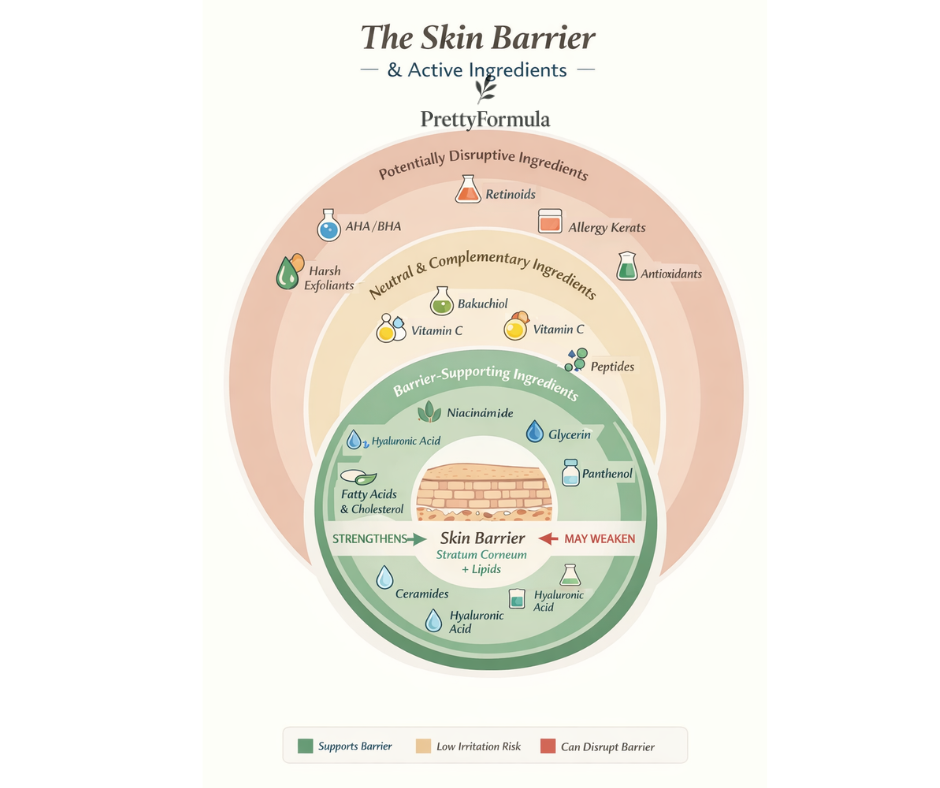
Think of it as a brick-and-mortar wall: corneocytes (flattened cells derived from keratinocytes) are the bricks, while the surrounding lipid matrix—including ceramides, cholesterol, and free fatty acids—acts as the mortar. This structure helps limit water loss and reduce the entry of external irritants. When it is disrupted, skin may become dry, more sensitive, or uncomfortable.
Why the Skin Barrier Gets Compromised
Several factors can disrupt barrier function:
- Over-exfoliation or harsh cleansers strip lipids and proteins
- Environmental stressors like UV, pollution, or low humidity
- Inflammatory skin conditions (eczema, rosacea, acne)
- Aging naturally reduces lipid production and cell turnover
- Inconsistent or aggressive use of actives like retinoids or acids
Barrier compromise often presents as tightness, redness, dryness, or stinging signs that your skin is struggling to keep moisture in and irritants out.
How to Support the Skin Barrier
Supporting the barrier isn’t complicated, but it requires intentionality:
1. Hydrate and Reinforce
- Ingredients like hyaluronic acid, glycerin, and sodium PCA attract water into the skin.
- Ceramides, cholesterol, and fatty acids help rebuild the “mortar” of the barrier.
2. Cleanse Gently
- Use low-pH, sulfate-free cleansers
- Avoid hot water and excessive scrubbing
3. Protect
- Daily broad-spectrum sunscreen prevents UV-driven barrier damage
- Antioxidants like vitamin C or niacinamide can buffer environmental stress
4. Layer Actives Thoughtfully
- Introduce acids, retinoids, or exfoliating ingredients slowly
- Pair actives with barrier supportive moisturizers to reduce irritation
How Barrier Health Impacts Your Routine
A well-supported skin barrier can make a routine more comfortable and help reduce dryness and irritation from certain active ingredients. It does not guarantee stronger results from retinoids, exfoliating acids, or pigment treatments:
- Retinoids and exfoliating acids may be easier to tolerate when the rest of a routine is gentle and moisturizing
- Moisturizers and humectants can reduce dryness and help skin retain water
- Niacinamide and other treatments can still have a place in the routine, but introducing them gradually may reduce avoidable irritation
Without a solid barrier, even the most advanced actives can trigger sensitivity instead of results.
Common Misconceptions About the Skin Barrier
- “Oily skin doesn’t need barrier support.”
Excess sebum does not equal a healthy barrier. Lipid composition and water retention matter more. - “Barrier repair is instant.”
Rebuilding lipids and protein structures takes time—often weeks of consistent care. - “If my skin stings, it’s cleaning properly.”
Stinging is usually a sign of barrier compromise, not effective cleansing. - “Thicker creams are always better.”
The right formulation matters more than heaviness; too occlusive a product can trap irritants or worsen breakouts.
Bottom Line
The skin barrier is the foundation for healthy, resilient skin. Understanding its structure and function isn’t just academic it’s practical. Every step in your routine, from cleansing to actives to sunscreen, interacts with this system. Protect it, support it, and everything else in your skincare arsenal performs better with less irritation.
Quick takeaway: If your skin feels persistently tight, dry, or stingy, simplify your routine: use a gentle cleanser, moisturizer, and daily sunscreen, and consider pausing irritating extras. Seek medical advice for severe or persistent symptoms.
Explore related guides: Niacinamide and the Skin Barrier and Salicylic Acid in Skincare. These articles offer additional context for building a thoughtful skincare routine.
Further reading: Dermatology review: the skin as a protective barrier.